Why the Ball Contest Changes After a Tackle
Why the ball contest changes after a tackle: follow arrival, binding and ball-release cues to understand when players may handle the ball or must keep hands off.
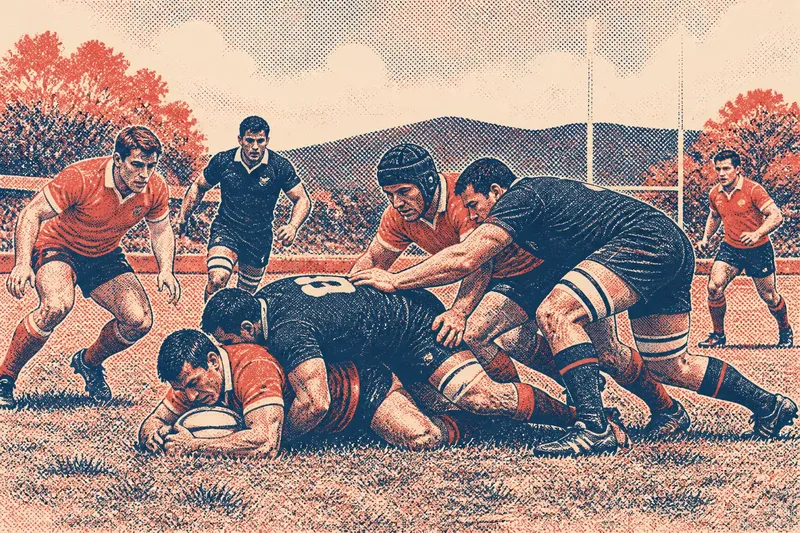
Why the ball contest changes after a tackle becomes clear when you watch the first arriving player. A tackle can leave the carrier and tackler on the ground while the ball remains playable; if players from both teams then bind over the ball on the ground, a ruck forms and the rules for handling it change. The useful sequence is to check onside position, entry and binding before judging a reach for the ball.
Check whether a ruck has formed
A ruck forms when at least one player from each team is in contact, on their feet, over the ball on the ground. Being nearby is not enough: the players must be in the area around the ball and in contact. Once the ruck exists, players who are part of it must not handle the ball.
If players are still getting up or approaching, but opposing players have not yet joined in the way required to form a ruck, the ball may still be available to an eligible player on their feet and onside, subject to the tackle laws. The same hand reaching down can therefore be lawful at one moment and illegal at another. The difference is the state of play, not how exposed the ball looks.
Think of a ruck as a door closing behind a queue. Before it closes, an eligible player may be able to collect the ball; once it has formed, players must join from the proper direction and cannot reach through the contest to take it.
Read each moment in the breakdown
If the carrier has just hit the ground
Look first for the tackler and the ball-carrier. The tackler must release the tackled player and the ball, then move away or get up before playing the ball again. The tackled player must release or play the ball promptly and must not hold on while lying on the ground. An arriving player must stay on their feet and enter from their own side of the tackle area rather than reaching across it.
Before a ruck forms, a player on their feet may be able to pick up the ball if onside and otherwise entitled to play it. The player must not dive or fall on it. Once a ruck exists, players who are part of it cannot use their hands to retrieve the ball.
If one team arrives first
The first support player can get over the ball, stay on their feet and bind if contact follows. That player may protect access for teammates, but cannot lie across the ball or use their hands after a ruck forms. A player who is offside cannot become eligible merely by joining later from the side.
If no opponent has joined in a way that forms a ruck, the arriving player may be able to pick up the ball while on their feet and onside, subject to the tackle laws. If an opponent joins and binds so that a ruck forms, players in it must keep their hands off. An early pickup and a later reach into a ruck are different actions, even over the same patch of grass.
If both teams are bound over the ball
Read the contest as a ruck. Players may drive or hold their position while bound, but must not handle the ball inside it. A player joining must come from their own goal-line side, bind to a teammate or opponent, and stay on their feet. Charging in without binding, joining from the side or collapsing the contest can be penalised.
A player who is part of the ruck may use a foot to play the ball only where the laws permit, including where the ball is available for that action. The precise application can depend on the ball’s position and the player’s eligibility, so do not treat any foot movement in a ruck as lawful by default. Players may also try to push opponents away from the ball while remaining bound and on their feet; they cannot simply reach down and lift it. The referee’s call of “ruck” is a useful signal, but the formation depends on the players’ positions and contact, not on the call itself.
If the ball is at the back or has come free
Once the ball has clearly left the ruck, an onside player may play it. A player at the back should not be assumed entitled to use a foot or collect the ball merely because they are standing there: the ball must be available for the action, and the player must be permitted to play it under the laws. Watch for the ball to be clearly outside the ruck; a hand reaching into the bodies before that point is not the same as collecting a loose ball.
When the ball is trapped beneath players and cannot be played, the referee may allow time for it to emerge or stop play and award a scrum, depending on how the situation developed. Players must not deliberately collapse or bury the ball to manufacture that outcome.
Follow arrival, binding and playing in order
This sequence helps make a busy breakdown easier to read without guessing at intent.
- Arrival: Check whether the player came from their own side of the tackle area and was onside. If not, look for an infringement rather than a lawful challenge; if so, continue to the next check.
- Binding: If a ruck is forming, check whether the player binds to a teammate or opponent and stays on their feet. If either condition is missing, the entry may be illegal; if both are present, watch how the player next contests the ball.
- Hands: Ask whether a ruck already exists. If it does, players in it must not handle the ball; if it does not, an eligible player on their feet may be able to pick it up, subject to the tackle laws.
- Release: Check whether the ball has clearly left the ruck. If it has, an onside player may play it; if it has not, a hand reaching into the ruck is different from collecting a loose ball.
Say a tackled player releases the ball beside their body. A teammate arrives upright from behind and picks it up before any opponent joins in a way that forms a ruck, then passes. The expected observable result is that play continues if the player was onside and otherwise entitled to act under the tackle laws. If an opponent had already joined and formed a ruck, the same hand pickup by a player in the ruck would instead risk a penalty.
Why the first legal arrival matters
At the tackle, possession remains contested through the duties of the tackled player, tackler and arriving players. Players must release, stay on their feet and enter legally. A turnover may happen before a ruck forms, but that is not permission to grab the ball from any position: the player must be eligible and obey the tackle requirements.
After a ruck forms, the contest shifts from hands to body position and footwork. A team may secure the ball by keeping opponents away while remaining within the laws, and the player at the back can prepare to play it when the ball is available. A clear view of the ball does not itself give a player permission to take it.
For the team in possession, an early support player can help protect the ball by arriving promptly and binding. For the defending team, a player who arrives legally before a ruck forms may have a chance to contest with hands; after formation, players must compete within the ruck laws and wait until the ball is available. In either case, arriving first matters only if the player is onside and acts lawfully.
What do viewers ask about the tackle and ruck?
Can a player pick up the ball after a tackle?
Yes, if the player is on their feet, onside and entitled to play it, and no ruck has formed. Once a ruck exists, players who are part of it cannot use their hands to collect the ball.
Does the tackler have to release the ball?
Yes. The tackler must release the tackled player and the ball, then move away or get up before playing the ball again. Remaining on the ground and holding on prevents the next legal action.
Can a player join a ruck from the side?
No. A player must enter from their own side and bind to a teammate or opponent when joining the ruck. Joining across the side can be penalised even if the player stays upright.
When is the ball out of the ruck?
The ball must have clearly left the ruck, rather than merely being visible between players’ legs or beneath them. Once it is out, an onside player may play it; until then, players must not handle it inside the ruck.
Use the referee’s decision to locate the infringement
Referees judge whether players released, entered legally, stayed on their feet and formed a ruck. Their view may differ from a spectator’s, especially when bodies hide the ball or a bind. Rather than treating every whistle as a ruling on who “won” the contest, identify the action that stopped play: a side entry, hands in, failure to release or another infringement in the tackle area.
Precise application can depend on the current competition laws and the referee’s interpretation. For a formal ruling, consult the relevant governing body’s law book or a qualified referee. For ordinary viewing, keep the sequence in mind: who arrived, whether they bound, and whether the ball was still in the ruck when someone tried to play it.
When you are watching the ball contest after a tackle, track the player who arrives first and then check whether a ruck forms before anyone handles the ball. That small pause separates a possible legal pickup from a reach that must wait for the ball to emerge.